On this page
- Start with a component-by-component record
- Copyright and proof in Australia
- Check the files customers will actually receive
- Separate font software from designs that use a font
- Check whether photos can be redistributed
- Keep your customer terms within your permissions
- Prepare evidence for the work you created
- Final checks before you publish
- Give buyers a clear picture of the bundle
- Sources
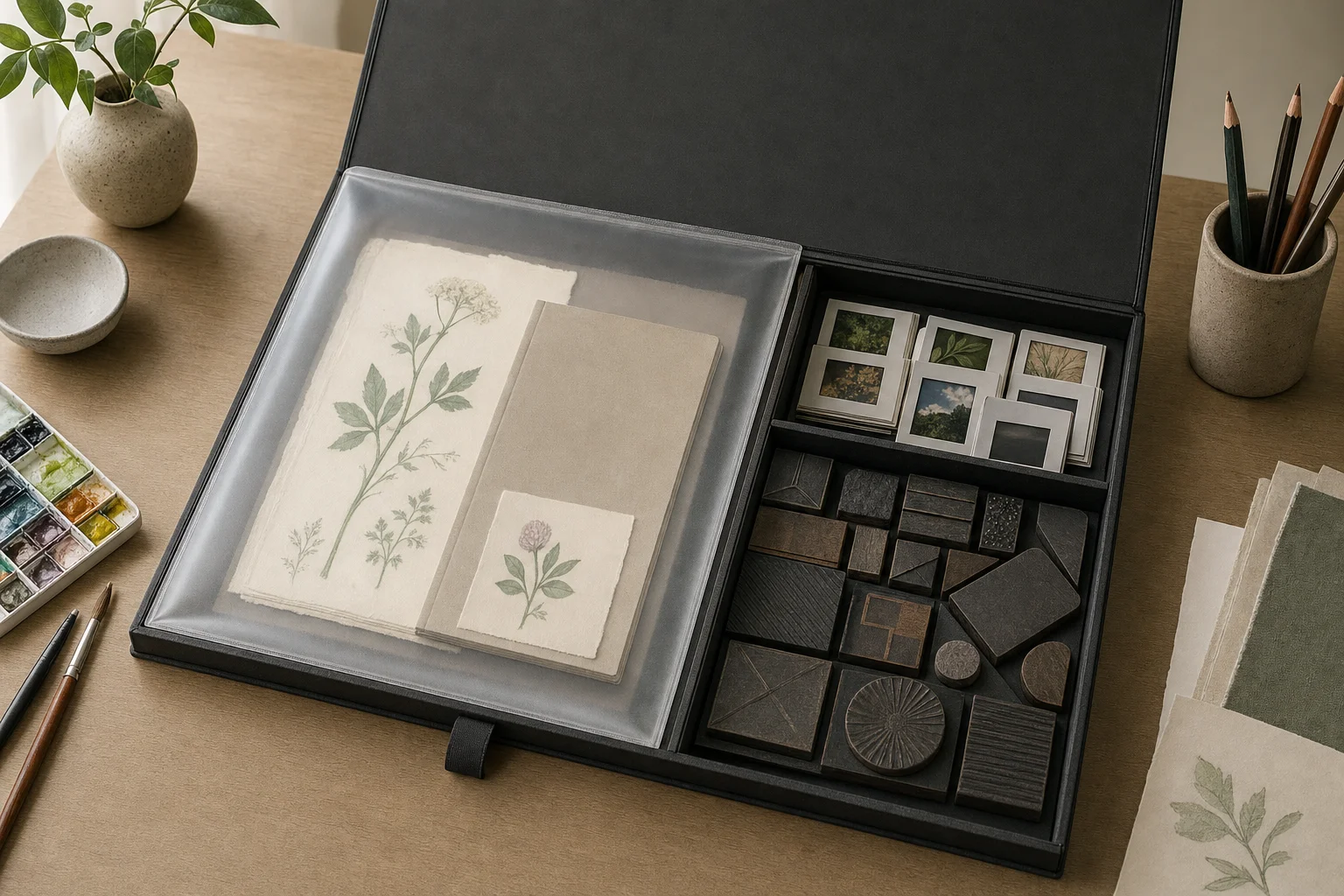
A clear distinction between original contributions and licensed ingredients helps keep a digital bundle’s rights organised.
A presentation bundle might include hand-drawn icons, editable slide layouts, a user guide, a font and licensed lifestyle photos. Buyers may download it as one package, but the components can have different creators and different rules for reuse.
Before listing it for sale, map each item to its source, check what you are allowed to supply and make buyer permissions clear. Keeping those details together also helps you identify which contributions are yours.
Start with a component-by-component record
Make an inventory for every file, or for a clearly defined group of files that share an origin and licence. Include enough detail to match each entry to the actual download.
- File identity: filename, folder, format and bundle version.
- Source: creator, supplier and where you obtained it; separate your own work from third-party material.
- Rights basis: your authorship, an agreement, a licence or another recorded permission.
- Permission records: the relevant licence wording, version, purchase record and any written clarification.
- How it is supplied: as a standalone file, editable element, embedded item, flattened design or preview.
- Buyer conditions: attribution, separate licensing, redistribution limits and notices.
- Evidence scope: whether the item is your contribution, excluded third-party content or permitted material shown only as context.
For the slide bundle, list your icons and guide separately from the font and photographs. If a photo appears within an editable slide, record both your layout work and the photo rather than treating the whole file as a single authorship claim.
Keep the detailed inventory with your release records. You can also prepare a shorter buyer-facing note that flags included assets, exclusions and anything customers need to obtain separately.
Copyright and proof in Australia
In Australia, copyright protection for an original work begins automatically once it exists in material form, such as when it is written, recorded or otherwise fixed. Copyright protects expression rather than the idea behind it, so a detailed written description of a project may be protected even though the bare idea is not.
Australia has no official copyright register. A private deposit does not create copyright, but a dated certificate can support evidence of who created submitted material and when it existed. Keeping proof matters because, if a dispute arises, evidence of an earlier date can help support your account of the work.
For books and songs, the general term is the author’s lifetime plus 70 years from the end of the year they died. Authors who died before 1955 were not brought back into copyright when the term was extended; their works remain in the public domain.
Check the files customers will actually receive
Separate font software from designs that use a font
A design using a typeface is not the same as supplying the font file itself. Adobe Fonts is one example: its service terms permit various design uses but prohibit packaging or sharing its font files. That is a provider-specific condition, not a rule for every font licence.
Review the finished download for font files and automatically collected font folders. If the terms do not allow redistribution, leave the software out and tell buyers they may need their own licence. Check font-embedding permissions separately rather than assuming that embedding settles the issue.
Check whether photos can be redistributed
Adobe Stock’s published terms offer an example of restrictions to look for: its Standard licence prohibits distributing standalone assets and restricts certain resale products, while its Extended licence also prohibits standalone distribution. A commercial-use or extended licence does not automatically allow every kind of reusable bundle.
For each image, compare the licence with the way it reaches the customer. Is it extractable, available as an editable layer or only part of a finished design? If the terms do not clearly cover your planned use, seek written clarification before including it. Cropping, flattening or adding decoration does not automatically remove a licence restriction.
Keep your customer terms within your permissions
Explain your own material separately from third-party components. Permission to use someone else’s work does not necessarily give you permission to pass it on for customers to reuse, and a deposit cannot widen the permission you have.
For your contributions, spell out the uses you intend to allow, such as commercial projects, modifications or client work. Say whether buyers may resell source files, and identify any third-party items they must license independently. Keep your product listing, download contents and instructions consistent.
Be precise about ownership as well as permission. A customer licence for using your work is not the same thing as transferring copyright ownership; describe the arrangement you actually intend to offer.
Prepare evidence for the work you created
Gather relevant source files, drafts, documentation and a release manifest. Identify the bundle version and who created each contribution. Keep your inventory and third-party permission records alongside them so the contents and their origins are easy to follow.
When making a deposit, identify the material you claim as your own. For example: “This deposit identifies my original icons, slide-layout contributions and guide text. The photographs and font software listed in the inventory are third-party material and are not included in my authorship claim.” Adjust the description to match the actual files.
Check licence terms before submitting any third-party component. If it is unnecessary or the terms do not permit submission, leave it out and record it in your inventory instead. If permitted material is included for context, label it clearly as third-party content.
A dated certificate from an online deposit supports evidence of authorship and timing for the material submitted. Keep it with your drafts, release files and permissions; it does not itself create copyright or establish that every component belongs to you.
Final checks before you publish
- Match every component to its creator and source.
- Keep the licences and permission records that apply.
- Inspect editable files, embedded content and export folders.
- Explain buyer permissions and any separate licensing needs.
- Identify your original contributions clearly in your evidence.
- Retain the released files, inventory and dated certificate together.
Protect your identified original contributions with a dated deposit through Copyright-Australia.com. Our online service provides a dated certificate to support your evidence of authorship and when your work existed.
Give buyers a clear picture of the bundle
Keep your own creations distinct from licensed ingredients, confirm that each file can be supplied as planned, and explain what customers may reuse. Clear records can help you support your contributions and set sensible expectations for buyers.
Sources
Article written with the assistance of AI. General information, not legal advice.