On this page
- Copyright and evidence in Australia
- Make the project history easy to follow
- Choose files that show development
- Connect your notes to specific changes
- Keep a clear account of contributions and tools
- Record collaborators and source materials
- Describe any AI assistance accurately
- Keep the version you actually shared
- Use dated deposits for meaningful milestones
- Check your dossier before sharing
- Protect a clear record of your work
- Sources
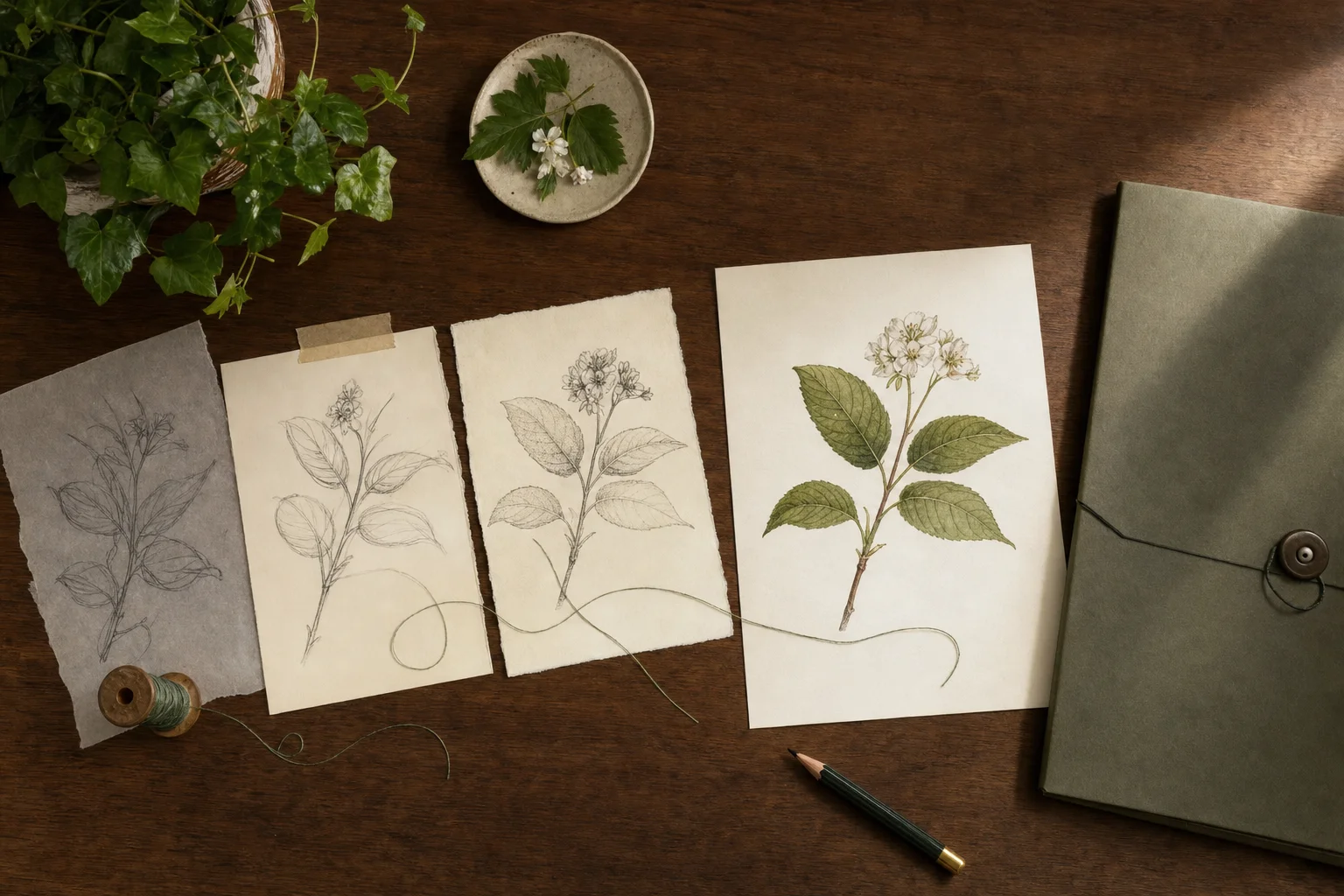
Selected sketches and drafts can help tell the story of how a finished work developed.
A finished work is only one part of its history. If you want to explain how a project developed, a clear selection of drafts, decisions and dated versions can help show your contribution.
Put these materials in a creative-process dossier: an organised record of the stages that led to the work, rather than a folder of every temporary file.
Copyright and evidence in Australia
In Australia, copyright protects an original work automatically once it exists in material form, such as being written, recorded or otherwise fixed. A deposit does not create copyright. It can help you establish who created a work and when it existed.
Australia has no official copyright register. That makes it important to keep your own evidence, such as dated drafts and files held by a trusted third party. In a dispute, being able to establish an earlier date can put you in a better position.
Copyright protects the way an idea is expressed, not a bare idea by itself. Keep the actual writing, artwork, recording or other material expression you create. A detailed, dated project document can record how an idea took shape, but it is the expression in that document—not the idea alone—that copyright protects.
Make the project history easy to follow
Start with a project folder and a brief index. For each important item, note what it is, who contributed, which version it represents and how it connects to the next stage. A concise, readable chronology is more useful than an unlabelled archive.
Choose files that show development
Include selected starting materials, such as an outline, handwritten notes, thumbnail sketches, an early layout or a melody recording. Photograph physical materials clearly and keep the originals where practical. A short label can explain what each item was intended to establish.
Choose drafts that show significant changes: perhaps the argument was reworked, the image composition changed, or the sequence of scenes was rearranged. Keep editable working files as well as readable exports when you can. Use consistent filenames and avoid saving over earlier versions.
Connect your notes to specific changes
Add brief, factual notes to important revisions and keep them beside the relevant files. For example, note that you moved a scene, changed the narrator and rewrote the dialogue to make a conflict less explicit.
Describe choices that can be seen in the work, rather than relying on a general claim that the whole project is original. If you write a note after the event, identify it as retrospective instead of implying it was made at the time.
Record collaborators and source materials
For a shared project, keep a record of each contributor’s role and retain agreements about ownership and permitted uses. Do not assume that everyone understands ownership in the same way.
For reference photographs, quotations, samples, datasets or commissioned contributions, note where each item came from and who supplied it. Keep relevant licences, permissions and correspondence. Giving credit does not, by itself, give you permission to use someone else’s work.
Describe any AI assistance accurately
If AI tools were part of your process, record the task, relevant inputs, outputs you selected and the changes you made afterwards. Where available, note identifying details about the tool. Keep generated material distinguishable from your own writing, drawing, arrangement or editing.
For an AI-assisted illustration, for instance, you might keep the generated starting image, your redraws, layer files and final composition. Prompt histories can provide context, but keep them with the actual versions and records of your work. A dossier helps document what happened; it does not, by itself, determine the copyright status of every element.
Keep the version you actually shared
Save the exact file you delivered, published or licensed, together with relevant project files and delivery records. Record creation, export, submission and publication dates separately rather than treating them as interchangeable.
If you revise the work later, give that version its own place in the chronology. This helps distinguish the work at one milestone from a later update.
Use dated deposits for meaningful milestones
You could deposit a substantial early version, a major revision and the finished work. Add a short index explaining how the files relate. Consider recording a milestone before an important disclosure, such as a pitch or delivery to a client.
Our online deposit service provides a dated certificate for the submitted work, supporting your evidence of authorship and the date that version existed. Keep the certificate with the exact deposited files and other project records. The filing date records the submitted version at that time; use earlier records to support an earlier creation date.
A dated filing supports your evidence, but it does not create copyright or conclusively settle authorship. It works best as part of a consistent record that includes drafts, source files and contribution details.
Check your dossier before sharing
- Keep an early substantive version and important revisions.
- Link notes about creative decisions to the files they describe.
- Distinguish your work from AI outputs and third-party materials.
- Retain permissions and agreements with collaborators.
- Identify the finished version and keep its delivery history.
- Store dated certificates with the files they document.
- Back up the records and limit access to confidential material.
You can explain your process without making your private archive public. Prepare a concise account for clients or partners, and keep sensitive drafts, personal information and confidential materials access-controlled.
Protect a clear record of your work
Keep the stages that best explain what you created, and preserve them in a way that makes the chronology easy to understand. Protect your work with a dated online deposit from Copyright-Australia.com, and keep your certificate with the relevant project files.
Sources
Article written with the assistance of AI. General information, not legal advice.