On this page
- Start with the work you published
- Link each post to the file behind it
- Save the websites and assets linked from your account
- Keep platform documents and account activity in a timeline
- File terms by version
- Save notices and your responses
- Copyright and dated evidence in Australia
- Use a deposit as one part of your evidence file
- A practical archive review
- Be ready for the next platform update
- Sources
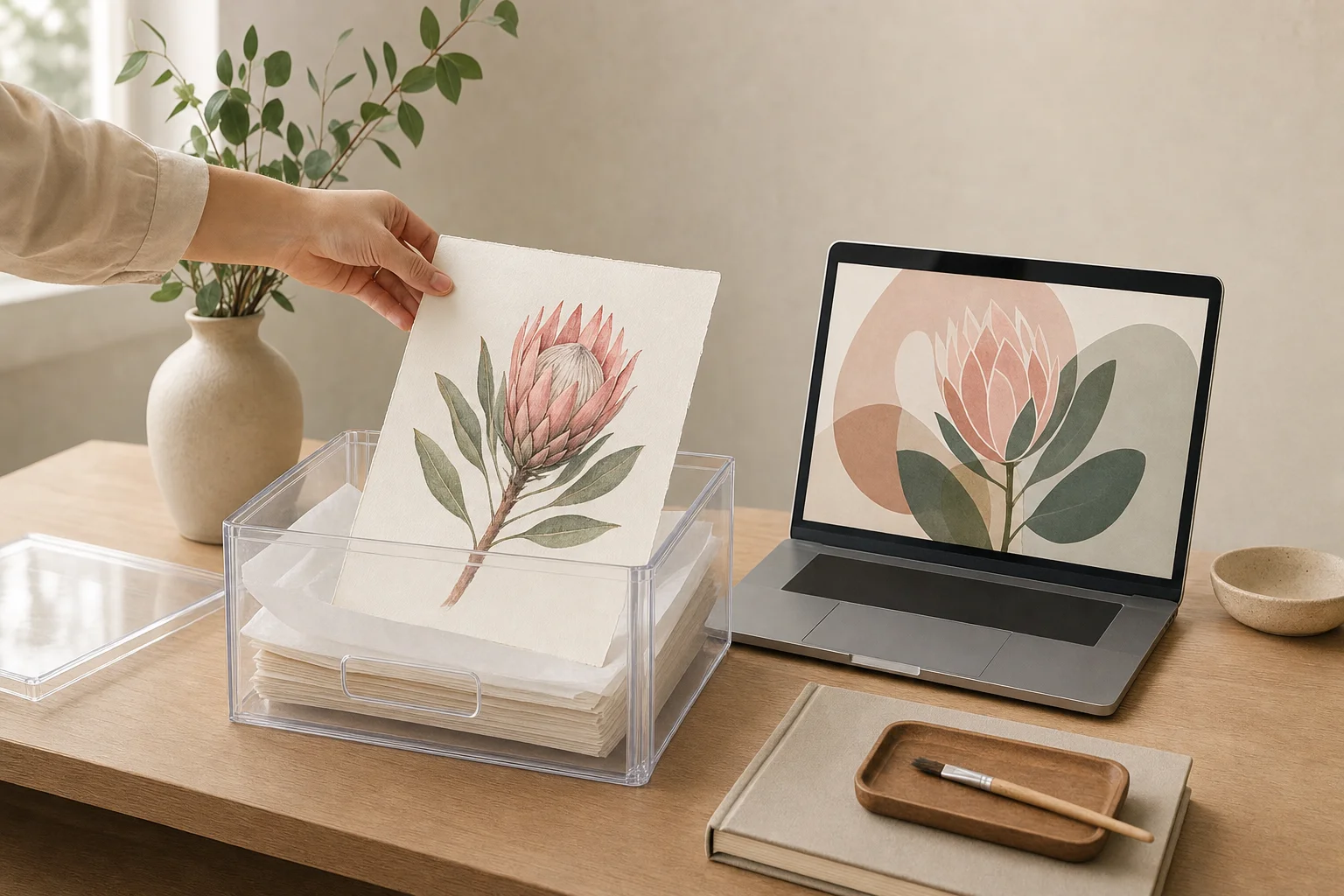
Keep original creative files and the records that show how and when they were used.
A platform update can leave you wondering which version of your work was online, what your account was told and which terms applied at the time. A well-organised archive helps you piece together that history using records rather than memory.
Keep the creative files, publication details and platform documents connected, but separate evidence of your work from permissions and account activity. Each tells you something different.
Start with the work you published
Link each post to the file behind it
For important posts, save the URL or post identifier, account name, publication date, caption and exact file uploaded. Note significant edits, and make clear which file was the first upload and which were later replacements.
Connect each post to its source files, drafts, related website pages, permissions and any deposit certificate. For example, a designer might link an illustration’s working file and finished version to a portfolio page and the social post that featured it.
Keep original files unchanged and add notes to working copies. Back up your archive, decide who will maintain it, and mark details you cannot verify rather than guessing.
Save the websites and assets linked from your account
List the pages your profile, ads or campaigns point to, such as a portfolio, online catalogue, landing page or download. Preserve important versions of those pages and the underlying writing, photographs, illustrations, design files, video masters and revision history.
Identify your own work separately from stock material, client contributions and licensed content. If you rely on website access settings or crawler preferences, ask your administrator to preserve the actual settings and their change history. Keep these technical records separate from documents about contractual permissions.
File terms by version
Save complete copies of the terms and policies relevant to your use of the platform, including commercial, advertising, catalogue or AI-feature terms where they apply. Keep linked schedules and policies if they form part of the terms.
For each copy, record its title, exact URL, stated effective date, the date you saved it, language and regional version. Keep a readable webpage or PDF, along with screenshots of significant banners. Label versions as currently applicable, proposed or superseded when the accompanying notices support that description. If the status is uncertain, note that.
Retain proposed changes even if they are later withdrawn or replaced. A proposal is not necessarily an operative term, and its withdrawal does not establish that permissions under existing terms have ended. If a document becomes unavailable, record that fact; a news summary is not a substitute for the document itself.
Save notices and your responses
Keep emails, in-app messages and business-dashboard notices about terms or permissions. Where available, retain original emails with their headers as well as readable copies.
Save the full message, account identifier, linked documents, displayed dates and available response options. If you accept a change, adjust a setting or contact support, note what you did, when you did it and any confirmation. Distinguish notice received from action taken; don’t fill gaps with assumptions.
A screenshot records what appeared on screen, but may not show every relevant condition or account event. Keep related messages and documents together. Store your archive securely and remove passwords, access tokens and unrelated customer information from copies you prepare to share.
Copyright and dated evidence in Australia
In Australia, copyright protection begins automatically when an original work is written, recorded or otherwise fixed in material form. Copyright protects the way an idea is expressed, not the idea by itself. There is no official Australian copyright register, and a filing does not create copyright.
A dated deposit with an independent service can help evidence who created a work and when a submitted version existed. Keep the certificate with that version and with relevant drafts or source files. The deposit supports your rights; it does not create them or determine what permissions a platform has.
Use a deposit as one part of your evidence file
You can deposit original work through our online service and receive a dated certificate. Identify the exact version you submit, then file its certificate alongside source files, drafts and contributor documents. A deposit date shows that the submitted version existed by that date; don’t describe it as the precise creation date unless other records support that.
Account access or uploading a file does not, by itself, settle who authored it or what permissions apply. Keep contributor agreements and third-party licences with the creative material they relate to. Evidence of authorship and date, platform notices and permission documents serve different purposes.
A practical archive review
- Save complete terms and identify proposed changes separately.
- File account notices with any action or confirmation.
- Record linked pages and preserve important website versions.
- Connect published posts to their original files and drafts.
- Keep contributor agreements and third-party permissions with the relevant work.
- Store each dated certificate with the version it relates to.
- Review the archive when you receive a new notice or publish a significant update.
If a platform change may affect your business, consider getting advice under the relevant law. Bring the actual terms, notices and account history rather than relying on a headline or a single excerpt.
Protect your creative work with a dated deposit through Copyright-Australia.com. If you’re documenting a site, you can also visit our website work page.
You can’t know in advance what a platform’s next terms will say, but you can keep a clear record of what you created, what your account received and what you did in response. When those records are connected, it is easier to explain the history of your work and review permissions with the relevant documents in front of you.
Sources
Article written with the assistance of AI. General information, not legal advice.