On this page
- Save what you can see before it changes
- Record the book page
- Keep details about the seller and author link
- Separate a false connection from possible copying
- What impression does the listing create?
- What material appears in both works?
- Copyright and dated evidence in Australia
- Put together records of your genuine book
- Make a report that fits the facts
- A practical evidence checklist
- Keep your evidence organised
- Sources
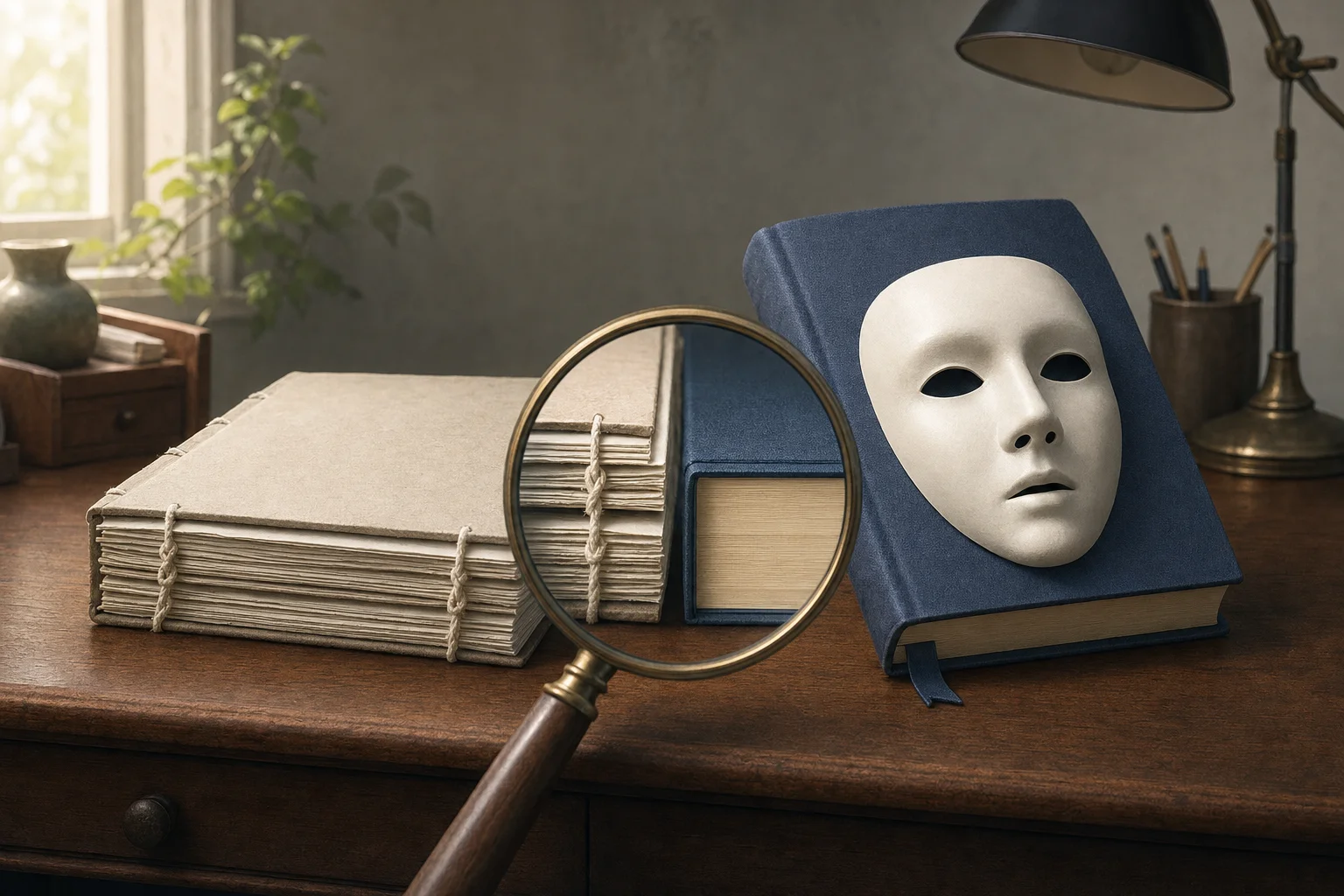
Keep clear records of your authentic manuscript and the book falsely linked to your name.
Finding a book credited to you when you had no part in writing it can be unsettling. Before reporting it, work out what the listing actually does: does it falsely connect the book with your identity, reproduce material you created, or both? A false credit alone does not show that your writing was copied.
Save what you can see before it changes
Make a record of the listing before asking for it to be corrected or removed. Keep untouched copies of your captures, make notes on duplicates, and write down when and how you collected each item.
Record the book page
Take full-page screenshots and save a PDF if possible. Capture the page address, the time and date you viewed it, the title, author credit, description, cover, displayed publication date, format and any product code, such as an ISBN or ASIN. Note separately the date shown on the listing and the date you captured it.
If the book appears in different formats or on different marketplaces, save each page separately. Keep visible previews and any relevant disputed pages, but do not get around access controls.
Keep details about the seller and author link
Record the seller’s displayed name, shop address and any business information shown. Note the publisher separately: the seller, publisher and person who uploaded the book may not be the same. If you order a copy, keep the receipt, order confirmation and the files or packaging you receive.
Save your author page with the disputed title visible. Record its address and where the author credit takes you when clicked. Note any use of your biography, photographs or website links, and describe the details that connect the page with you rather than another person with a similar name.
Separate a false connection from possible copying
What impression does the listing create?
A book credited directly to you raises a question about attribution. A different book placed on your author page may give readers a misleading impression of an association. Describe what you can demonstrate, without assuming that an incorrect link was deliberate or that it proves the contents were copied.
What material appears in both works?
If you suspect copying, identify the expression you believe has been used. For text, note the source version, chapter or page and the corresponding passage in the disputed book. For a cover, point to the particular illustration, photograph or design element.
Different parts of a book may have different rights holders. Your manuscript, a publisher’s description and commissioned cover art might be controlled by different people. Check what was used, who owns or controls the relevant rights, whether permission was given and whether an exception applies. A shared title does not, by itself, show that your prose was reproduced; compare the actual material.
Copyright and dated evidence in Australia
Under the Copyright Act 1968, copyright protects an original work automatically once it exists in material form, such as writing or a recording. It protects the way an idea is expressed, not the idea on its own. There is no official Australian copyright register: IP Australia registers trade marks, designs, patents and plant breeder’s rights, not copyright.
Because protection is automatic, it is up to you to keep evidence of your authorship and when the work existed. Drafts and files kept by a trusted third party can help. A dated filing with a private service can also provide evidence of authorship and date; it does not create copyright. In a dispute, the party able to establish the earlier date is better placed.
Put together records of your genuine book
Gather drafts, revision histories, messages with editors, publishing agreements and licences for cover material. Arrange them in date order. Keep records that link your legal name or pen name to the authentic work, and identify any publisher or collaborator who may need to be involved.
If a suspicious email is part of the matter, save the original message, including its full headers and attachments, rather than relying only on a screenshot. Describe conduct you can document instead of guessing how the book or message was made.
You can deposit the authentic manuscript and keep the dated certificate with the exact file submitted. Label deposits of later substantial versions clearly. The certificate records the deposit and its date; it does not certify an earlier creation date or show that a deposit happened before it did. Keep your earlier drafts as well.
Make a report that fits the facts
If the issue is a false author credit or an incorrect association, explain that you did not write or authorise the book, show how it is connected with your identity, and ask for a correction or removal. Use a platform process for inaccurate author details, misleading listing information or author-page errors if one is available.
If you are reporting copying, identify the work, your rights or authority to act, the material in question and where it appears. Complete any required declarations accurately. If you believe both things have happened, set out the attribution issue and the copying concern separately.
Keep a copy of your report, its attachments, any reference number and the platform’s replies. If a report is declined, ask what information is missing and provide relevant material. For a continuing listing, significant harm or uncertainty about your rights, consider getting legal advice. A dated certificate or complaint cannot guarantee that a listing will be removed.
A practical evidence checklist
- Save the listing, its address, product identifiers and the date you viewed it.
- Record seller information and how the book appears on your author page.
- Compare any suspected copied text or artwork separately from the author credit.
- Collect drafts, agreements, licences and records of your genuine work.
- Make a clear report and keep its attachments and response history.
- Check the listing and your author page again after the platform responds.
Keep your evidence organised
A book falsely linked to your name calls for a careful, specific response. Preserve the listing, assess identity concerns and possible copying separately, and organise the records that support your account.
Deposit your book manuscript with Copyright-Australia.com to receive a dated certificate as evidence of authorship and when the deposited work existed. Keep it with your drafts and other records; the deposit supports your evidence but does not create copyright.
Sources
Article written with the assistance of AI. General information, not legal advice.